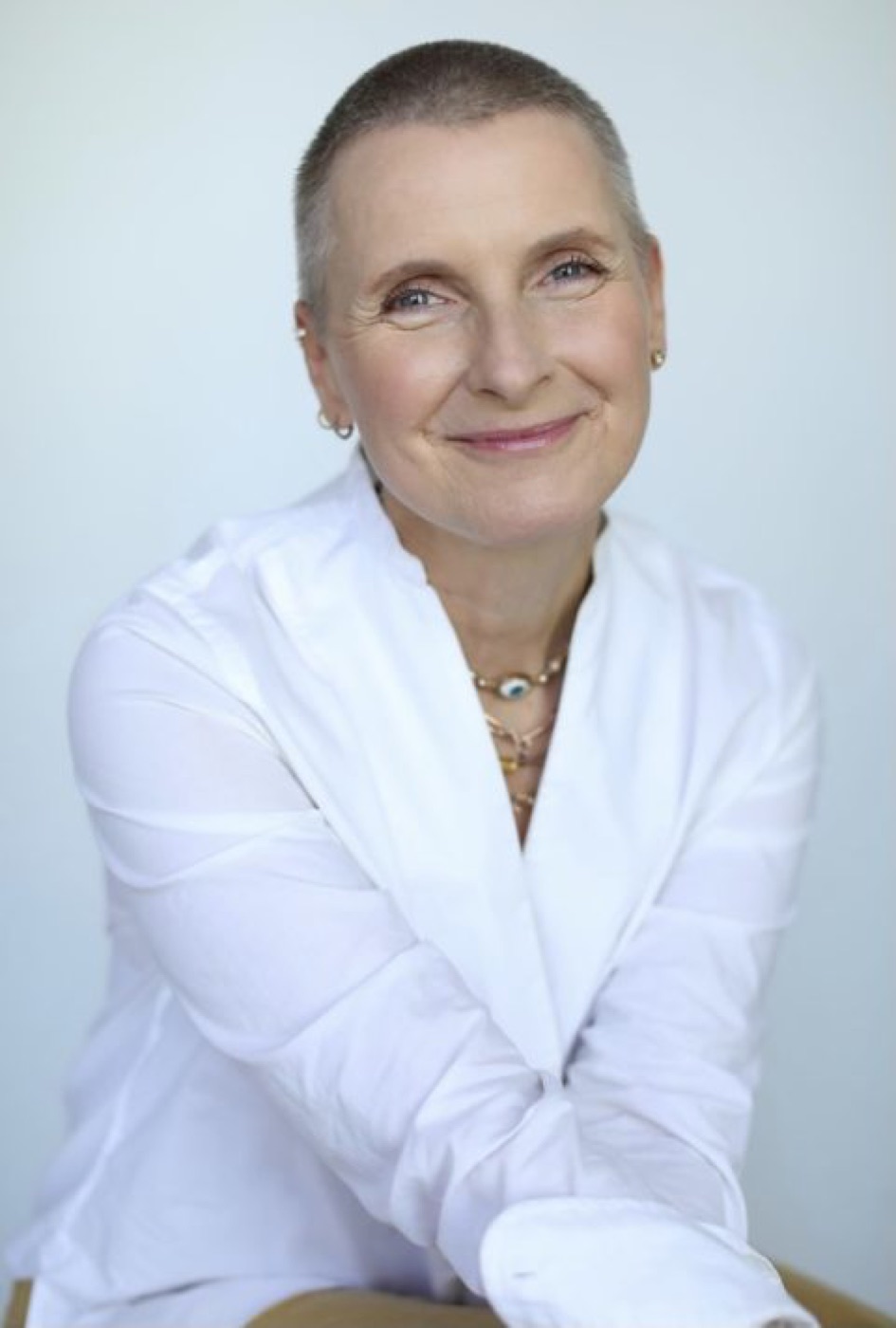

Start with Big Magic: Creative Living Beyond Fear (2015). It is Elizabeth Gilbert at her most direct, and it works whether or not you consider yourself creative. The book is short on theory and long on permission: her argument is that curiosity matters more than passion, that fear is a boring roommate, and that ideas are things you either act on or lose. If you want to hear it rather than read it, the audiobook edition is on Spotify (a German abridged recording, Nimm dein Leben in die Hand und es wird dir gelingen, so it suits German listeners best). English readers are better off with the print or an English audio edition.
Big Magic is a good entry point because it shows you her voice, her habits of thought, and her central question: how do you live a creative life without being wrecked by it?
Eat Pray Love. This is the book that sold the most and made her famous, and it is the one most people assume they already know. Read it second, once you know how she thinks. It is a memoir of rebuilding after a collapse, structured around Italy, India, and Indonesia.
City of Girls (2020). Her turn to fiction in this stretch of her career, a novel about a young woman in 1940s New York theater. It is the best proof that she is a storyteller first and a self-help figure second. A recording is on Spotify in both unabridged and abridged German editions. Take the unabridged one if you want the full novel; the abridged version is much shorter.
Stubborn Gladness. A one-track release from 2015, and the quickest way to sample her on joy as a discipline rather than a mood. It is the small, low-commitment option, so use it when you want a taste without a time investment.
If you want her earlier, more literary side, her bio points to Pilgrims, Stern Men, and The Last American Man, a finalist for the National Book Award about the woodsman Eustace Conway.
Expect warmth, humor, and a conversational voice that sounds like a friend talking you down off a ledge. She tells stories on herself. She uses spiritual language loosely and without dogma. She is encouraging to a degree that some readers find a relief and others find a little much. The prose is clear and quick, and you can finish the shorter works in a few sittings.
She is not only the author of Eat Pray Love. Judging her by that one book, or by the film, misses her journalism (Spin, GQ, The New York Times Magazine), her story collection, her National Book Award finalist, and her novels.
She is not offering a productivity system. Big Magic does not tell you how to schedule your art. It tells you how to stop treating it as a life-or-death referendum.
She is not claiming that creativity requires suffering. Much of her work argues the opposite: you can make things without destroying yourself.
The spiritual language is not a requirement. You can take the practical advice and leave the mysticism alone.
It lands hardest at transitions: after a breakup, a divorce, or a loss; when you are stuck at the edge of a creative project you keep postponing; when you are in recovery or rebuilding your routines; or when you are in your thirties or forties asking whether the life you built is the one you want. Her topics, including memoir, transformation, relationships, recovery, and self-care, are all about starting over with some kindness toward yourself.
Day 1: Read the first third of Big Magic. Write down one thing you have been curious about and never acted on.
Day 2: Finish Big Magic. Spend twenty minutes on that curiosity, however clumsily.
Day 3: Listen to Stubborn Gladness. Notice what it asks you to do with your attention.
Day 4: Begin Eat Pray Love, reading the Italy section.
Day 5: Keep reading, and pause to write a paragraph about a time your life fell apart and what you did next.
Day 6: Start City of Girls, either the unabridged or abridged recording, and let yourself enjoy it as a story.
Day 7: Return to your Day 2 project and spend thirty minutes on it. Decide which of her books you want to keep going with, and which parts you can leave behind.