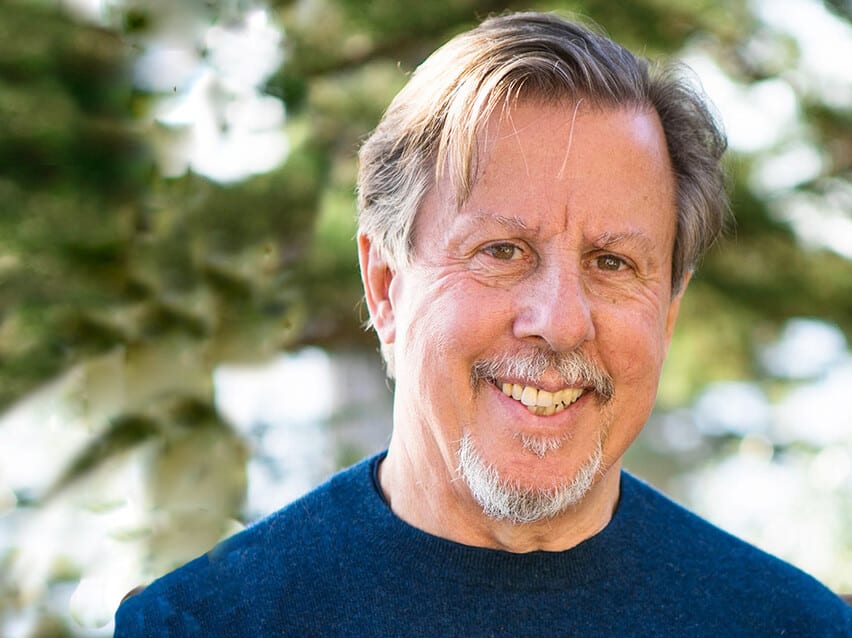

Richard C. Schwartz, PhD, is best known as the creator of Internal Family Systems (IFS), a therapeutic model built on a deceptively simple proposition: the mind is naturally multiple, and that multiplicity is not a disorder. Trained as a systemic family therapist and working as an academic, Schwartz has spent his career developing and teaching a way of relating to the inner life that treats a person less like a problem to be fixed and more like a family to be understood. His work has traveled well beyond the consulting room, reaching clinicians, meditation practitioners, and general readers interested in healing and self-understanding.
Public sources do not document where Schwartz grew up or the details of his early years, so any account of his childhood would be speculation. What is documented is the shape of his professional beginnings: he started his career as a systemic family therapist and an academic, a grounding that proved decisive for everything that followed. Today he lives near Chicago with his wife, Jeanne, close to his three daughters and six grandchildren.
Schwartz's path to IFS began with listening. Working within a systems framework, which looks at how members of a family influence one another and how roles harden under stress, he noticed that his clients kept describing distinct "parts" of themselves. They spoke of an inner critic, a part that wanted to numb out, a part that felt ashamed or frightened. Rather than dismiss this language as metaphor or symptom, he took it seriously and began to ask what would happen if those parts were treated the way a family therapist treats members of a family.
Through the 1980s, this line of inquiry became the foundation of IFS. A further observation proved just as important. When clients' protective parts felt safe enough to relax, people spontaneously experienced qualities such as confidence, openness, and compassion. Schwartz came to call this presence the Self. It was not something built through effort or technique, but something that emerged when the internal system settled.
IFS views each person as a system of protective and wounded inner parts, guided by a core Self that remains fundamentally undamaged. Its central claim is that the mind's multiplicity is healthy. Like members of a family, inner parts can be forced into extreme roles by difficult experiences, but each also carries valuable qualities of its own. A part that has become harshly self-critical, for example, may be trying to protect the person from rejection.
This stance matters because it de-pathologizes what much of psychology has historically framed as fragmentation. Instead of trying to eliminate or overpower troublesome parts, IFS invites a person to access the compassionate Self and, from that position of inner leadership, understand and transform those parts. The idea of "Self leadership" is therefore both a clinical goal and a broader way of living: to be led by curiosity and care rather than by whichever part is loudest.
The model's reach into spirituality and mindfulness is not incidental. Its idea of a Self that is present beneath conditioning resonates with contemplative traditions, which is part of why Schwartz is also described as a meditation teacher and why his work appears in conversations about psychology, spirituality, and mindfulness alike.
Schwartz has authored or co-authored more than ten books on IFS and related topics, and has published over fifty articles. Among the best known are Internal Family Systems Therapy, the foundational text for clinicians, and No Bad Parts, which presents the model's ideas in a form accessible to a general audience. The title of the latter distills the philosophy of the whole approach.
In 2000, he founded The Center for Self Leadership as a training organization for the model. In 2019 it was renamed the IFS Institute, with the mission of bringing more Self leadership to the world. Schwartz serves as its president, and the Institute primarily offers training for professionals. He is also a Teaching Associate in Psychiatry at Cambridge Health Alliance, a Harvard Medical School teaching affiliate, and a featured speaker for national professional organizations.
Schwartz's present work centers on stewardship and dissemination. As president of the IFS Institute, he oversees the training of professionals who carry the model into their own practices, while continuing to write, teach, and speak. His academic affiliation keeps the approach in dialogue with the medical and psychiatric establishment. The fact that the Institute's stated mission is framed around the world, not only the clinic, signals an ambition that extends past therapy toward a general culture of Self leadership.
The people Schwartz reaches fall into several overlapping groups. Therapists and counselors encounter IFS as a structured, trainable clinical model. Readers of books like No Bad Parts meet it as an invitation to befriend their own inner critics, impulses, and fears. Meditators and spiritual seekers find in the concept of Self a bridge between psychological work and contemplative practice. His audience extends to listeners as well, with more than 43,000 followers on Spotify.
Why he matters is, in the end, a question of tone as much as theory. Many people carry a quiet suspicion that something inside them is broken or must be silenced. Schwartz's contribution is to offer a different premise: that every part has a reason for being there, that none is beyond redemption, and that beneath the noise lies a Self capable of leading with compassion. Whether one encounters that idea as clinician, client, or curious reader, it reframes self-criticism as a relationship that can be repaired, and that reframing is the core of his legacy.